
How AI Helps Logistics & Supply Chain
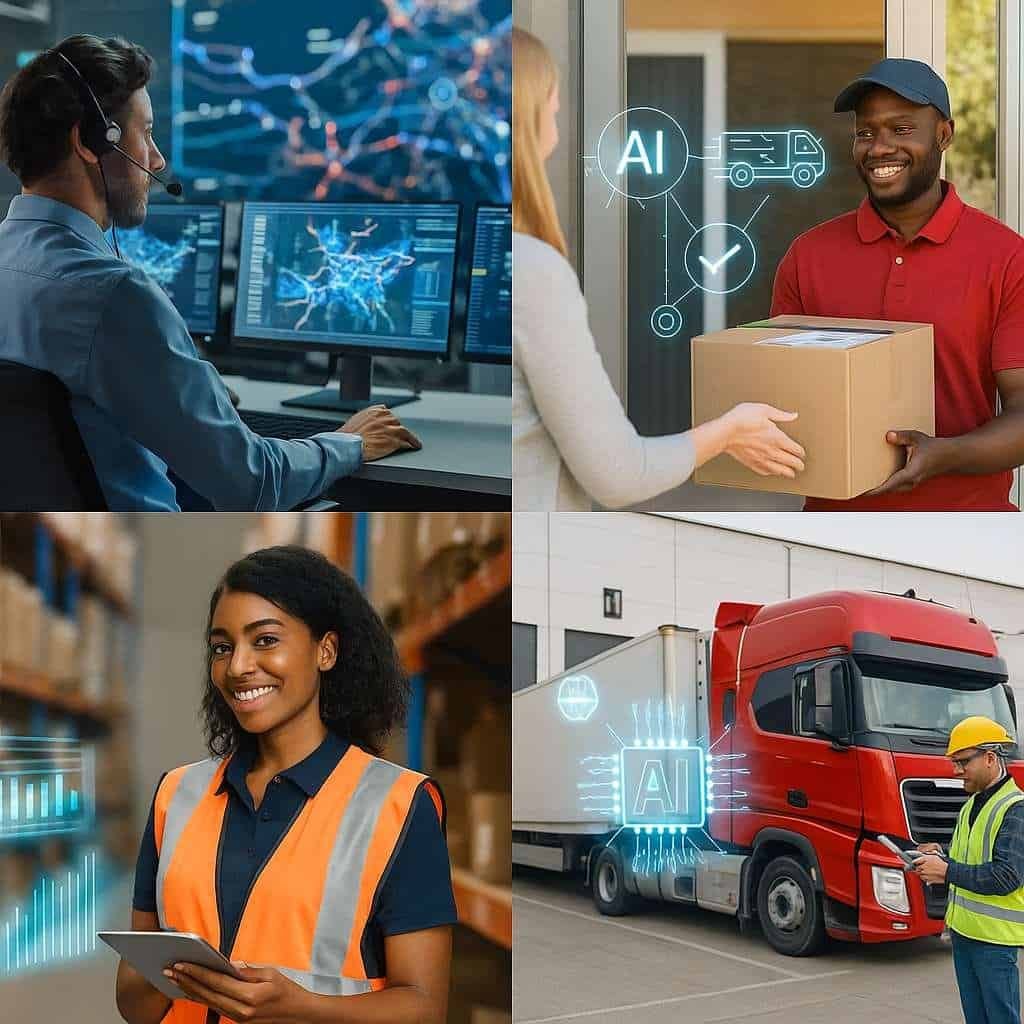
AI for Logistics enhances operational efficiency across logistics, warehousing, distribution, and fulfillment. It predicts demand, optimizes delivery routes, automates shipment updates, and reduces operational bottlenecks in real time.
Key Benefits
Popular Use Cases
- Route optimization & fleet efficiency management
- Real-time shipment status updates (Web + WhatsApp)
- Driver communication automation
- Warehouse inventory forecasting
- Delivery scheduling & rescheduling assistant
- Delay prediction using historical & live data
Frequently Asked Questions
Can AI for Logistics help reduce delivery delays?
Yes — our predictive models analyze traffic, driver behavior, weather, and historical data to proactively warn of delays.
Do you support WhatsApp tracking updates?
Yes — customers and drivers get automated updates for pickup, dispatch, and delivery.
Can AI integrate with our TMS, WMS, or ERP?
Absolutely — we integrate with all major logistics and supply chain software platforms.
Is route optimization included?
Yes — AI automatically finds the fastest, cheapest, and most efficient delivery routes.
How long does setup take?
Basic tracking setup takes 7–10 days. Full optimization models take 20–30 days.
Why Logistics and Supply Chain Companies Are Rapidly Adopting AI
The logistics and supply chain industry is becoming more complex with rising customer expectations, faster delivery demands and the need for real-time visibility. Customers expect instant updates, accurate shipment tracking, timely deliveries and quick support across multiple communication channels. Manual responses and outdated systems make it difficult for logistics providers, courier companies, transport firms and warehouse teams to maintain service quality. This is why ai for logistics has become essential for modern supply chain companies aiming to improve efficiency, reduce delays and automate communication.
One of the biggest advantages of ai for logistics is the ability to automate shipment tracking and delivery updates instantly. Instead of calling customer care or waiting for an email, customers can simply ask the AI assistant about their order status, expected delivery time, dispatch details or delivery partner information. AI fetches real-time tracking data from logistics systems and shares accurate updates on WhatsApp, websites or voice calls, reducing the workload on support teams and improving customer satisfaction.
Warehouse and inventory communication also improves significantly with AI. Customers can check product availability, inbound stock status, warehouse dispatches, picking and packing updates, and item-level information automatically. Internal teams benefit too—warehouse managers receive fewer repeated inquiries, enabling them to focus on core operations. With ai for logistics, brands can reduce communication delays that often slow down the supply chain.
Delivery agents and fleet operators gain real-time support from AI-powered systems. Drivers can get instant assistance with route details, navigation help, delivery instructions, pickup timings, hub location information and compliance requirements. For transport and trucking companies, AI ensures drivers receive up-to-date information without manual coordination, making operations smoother and more reliable.
Logistics companies often deal with high call volumes related to package delays, damaged shipments, return pickups, COD requests and transit issues. AI automation resolves these queries instantly, guiding customers with the correct process steps, required documents and contact points. This reduces support load and ensures every inquiry is handled consistently and professionally.
Vendor and partner communication also becomes more efficient with ai for logistics. AI can share purchase order updates, delivery schedules, invoice details, stock movement information, shipment confirmations and expected arrival times. This ensures better coordination between warehouses, suppliers, hubs, franchise partners and fulfillment centers, reducing miscommunication and operational errors.
For companies offering B2B or B2C logistics services, AI helps automate onboarding, KYC documentation, invoice sharing, customer ticketing, issue resolution and escalation support. By reducing manual tasks, businesses can process shipments faster, improve service quality and scale their operations without increasing staff count.
Ai for logistics integrates seamlessly with TMS (Transport Management Systems), WMS (Warehouse Management Systems), OMS (Order Management Systems), ERP platforms and tracking APIs. It can pull real-time data such as AWB numbers, shipment statuses, delivery exceptions, hub transfers and inventory movement. This reduces manual checking and ensures both customers and staff get accurate data instantly.
As competition increases in the logistics and supply chain sector, companies must deliver faster communication, transparent tracking and reliable customer support. From order pickups to last-mile delivery, AI enhances every stage of the logistics workflow. Businesses that adopt ai for logistics gain a significant advantage by reducing operational costs, improving response times and ensuring a seamless delivery experience for customers, partners and internal teams.
Ready to Transform Your Logistics & Supply Chain Operations?
Discover how ai for logistics can automate shipment tracking, delivery updates, warehouse queries, fleet assistance and customer communication across WhatsApp, web and voice. Boost efficiency, reduce manual workload and ensure faster, more reliable logistics with intelligent automation.